Honey in the Backyard
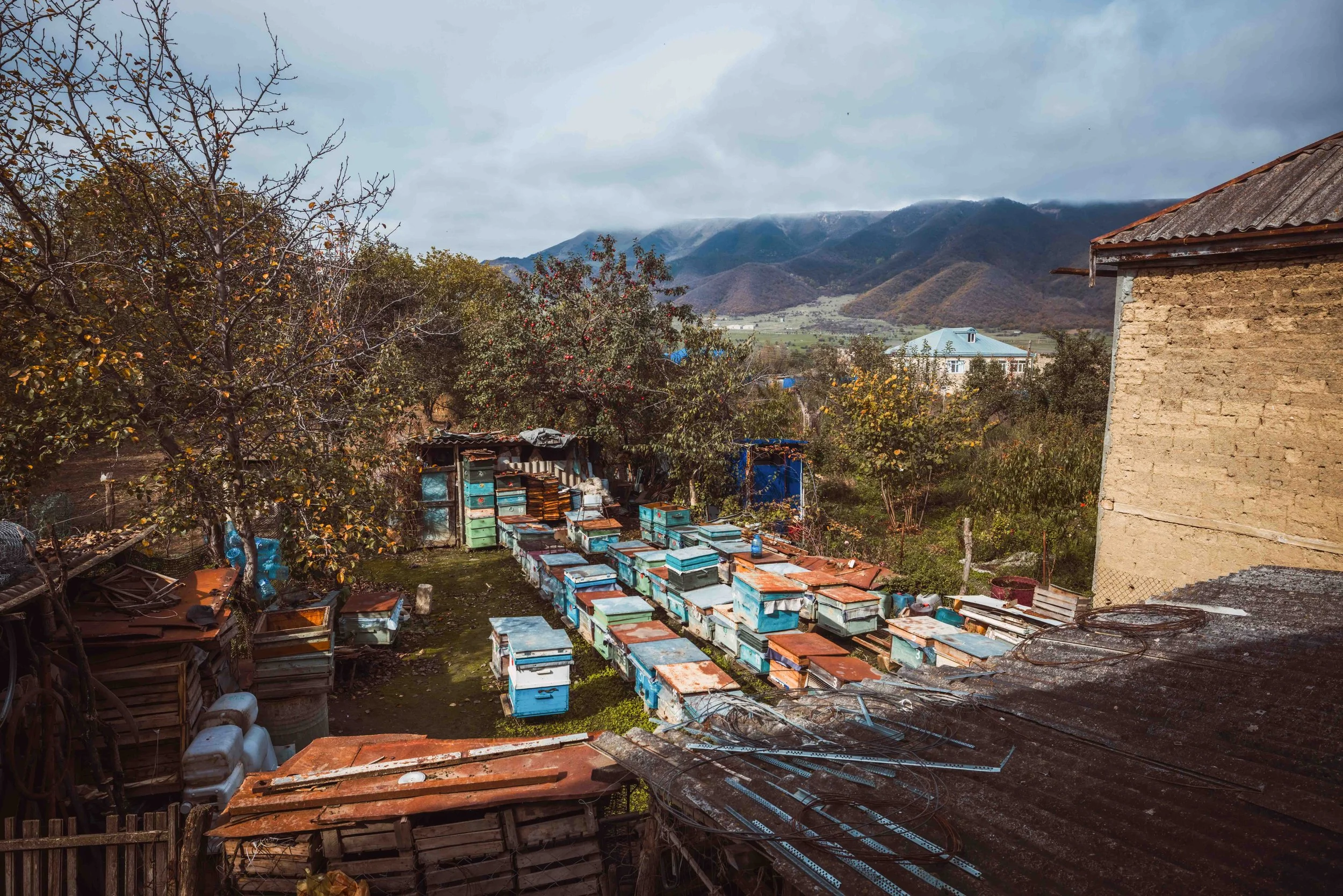
In the yard of his home, nestled between the hills and farmland of the quiet village of Anıq in the Qusar region of northern Azerbaijan, beekeeper Ehtiram Qenberov keeps several wooden beehives — a craft he has practiced for more than thirty years, passed down from his father and grandfather.
With the arrival of early autumn, the bees begin to slow down as they prepare for the colder months. Still, Ehtiram lifts the wooden hive box carefully and opens it in the crisp morning air, checking the colony from time to time to make sure everything is in good condition.
“Even though the bees sleep and don’t work in winter, I always go out to check on them.”
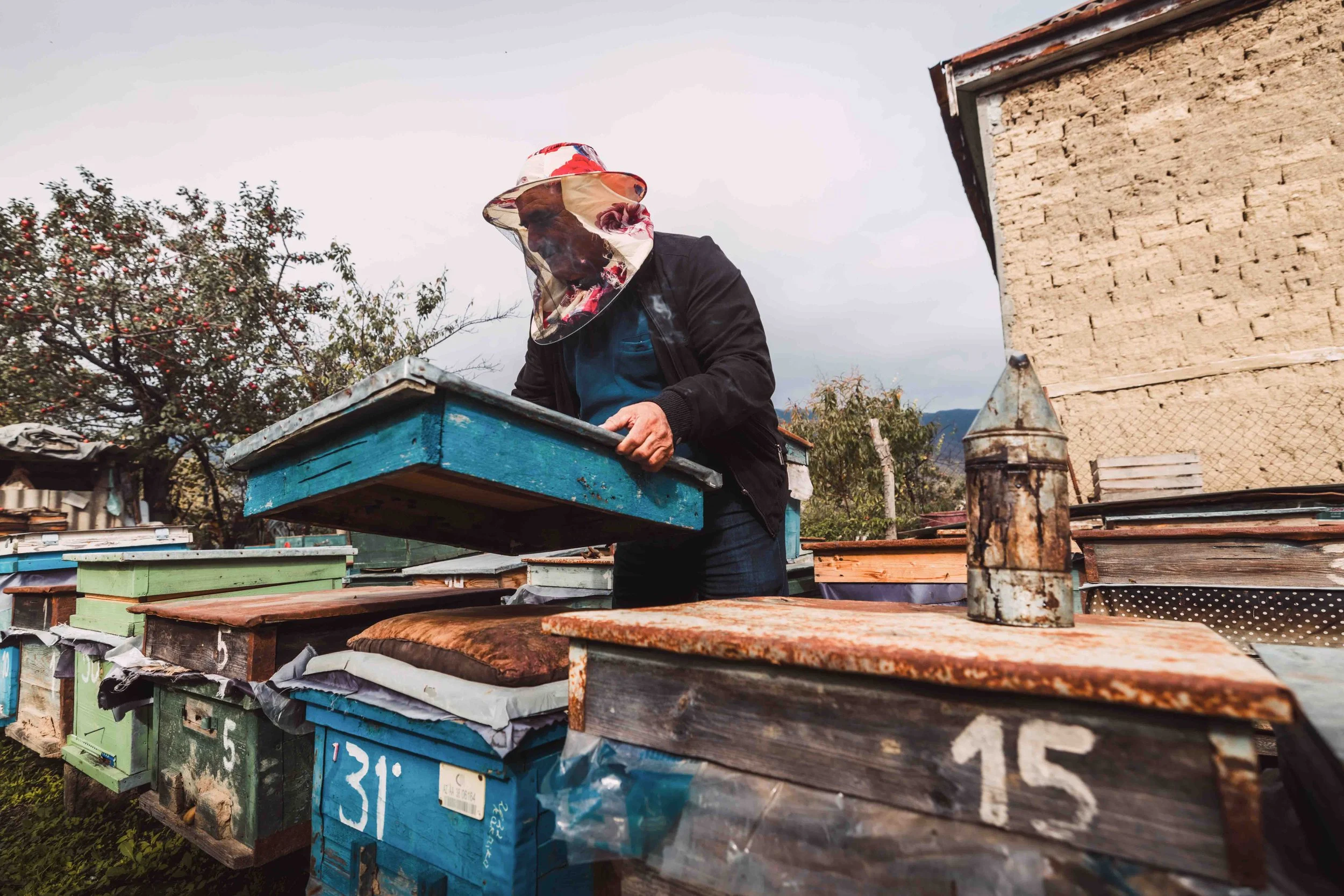
Before opening the hive, Ehtiram uses a traditional smoker to release a light cloud of smoke — an old method used to calm the bees. The smoke drifts slowly across the yard as he prepares to inspect the inside.
“We use smoke to calm them. There’s nothing to fear — we’re used to them, like family.”
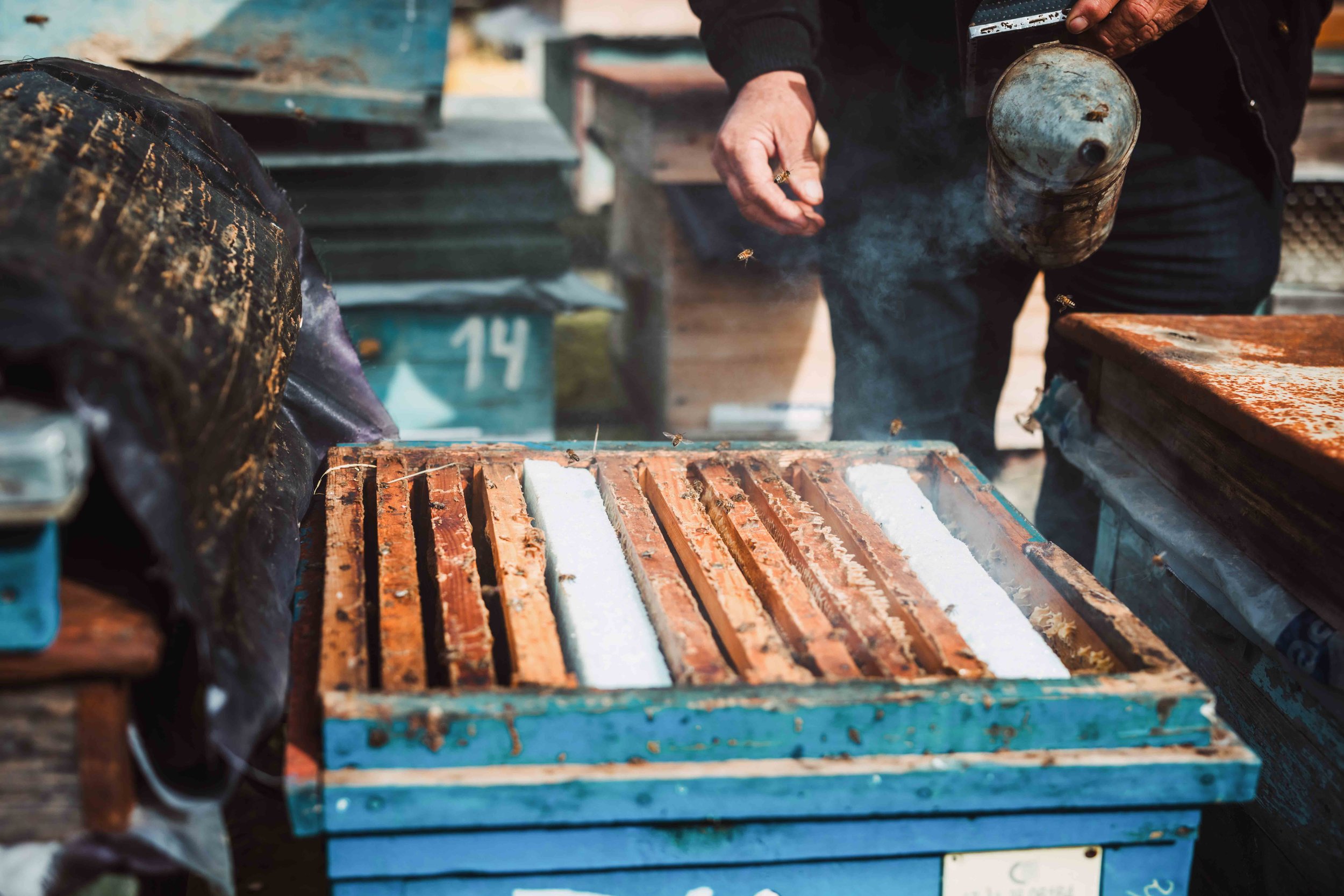
He lifts the lid and inspects the wooden frame inside the hive. Layers of wax and honey are clearly visible as he checks the bees’ condition and makes sure the cells are sealed properly for the coming winter.
“I have around forty hives. I follow them from early spring until autumn, and then we close them for rest.”
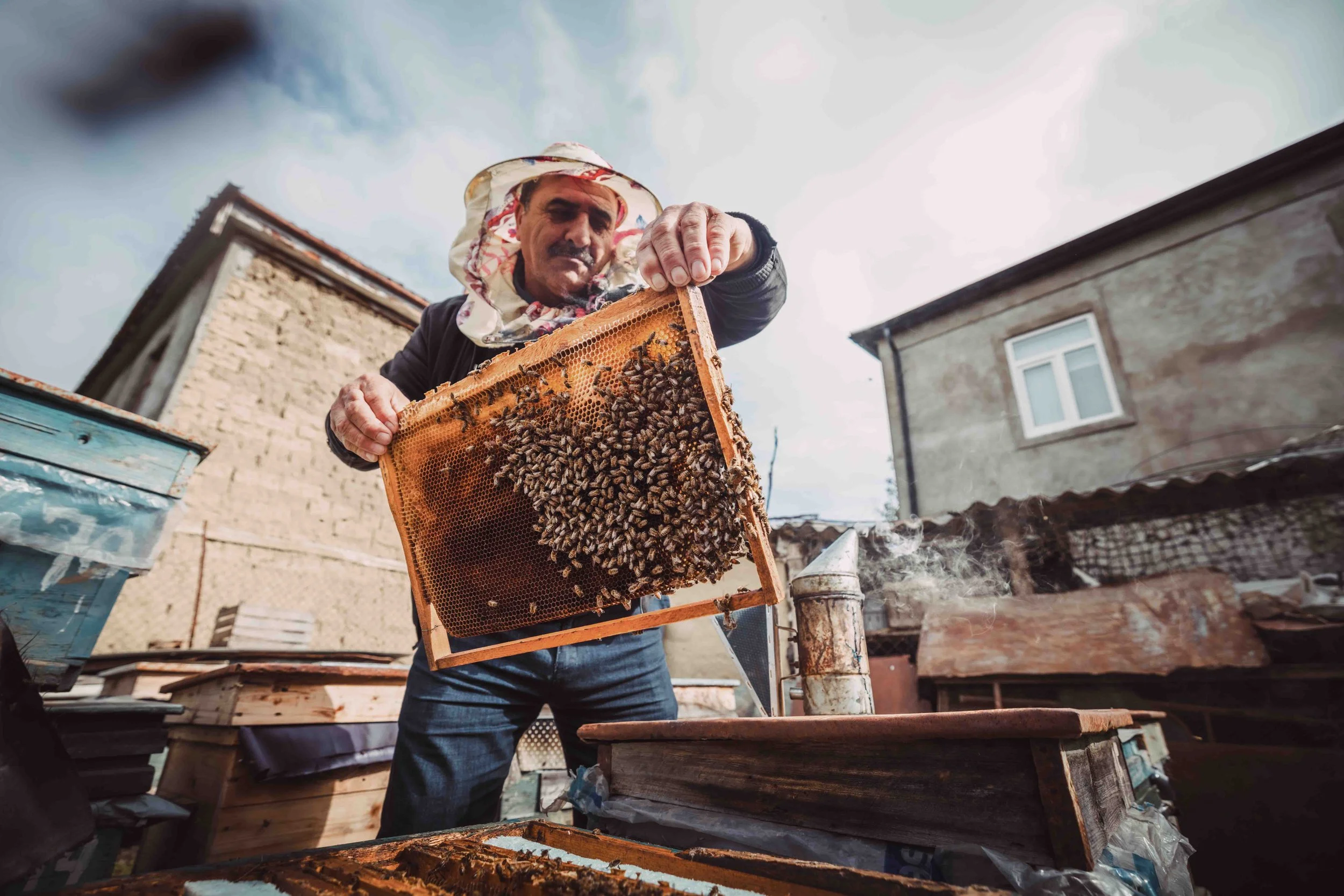
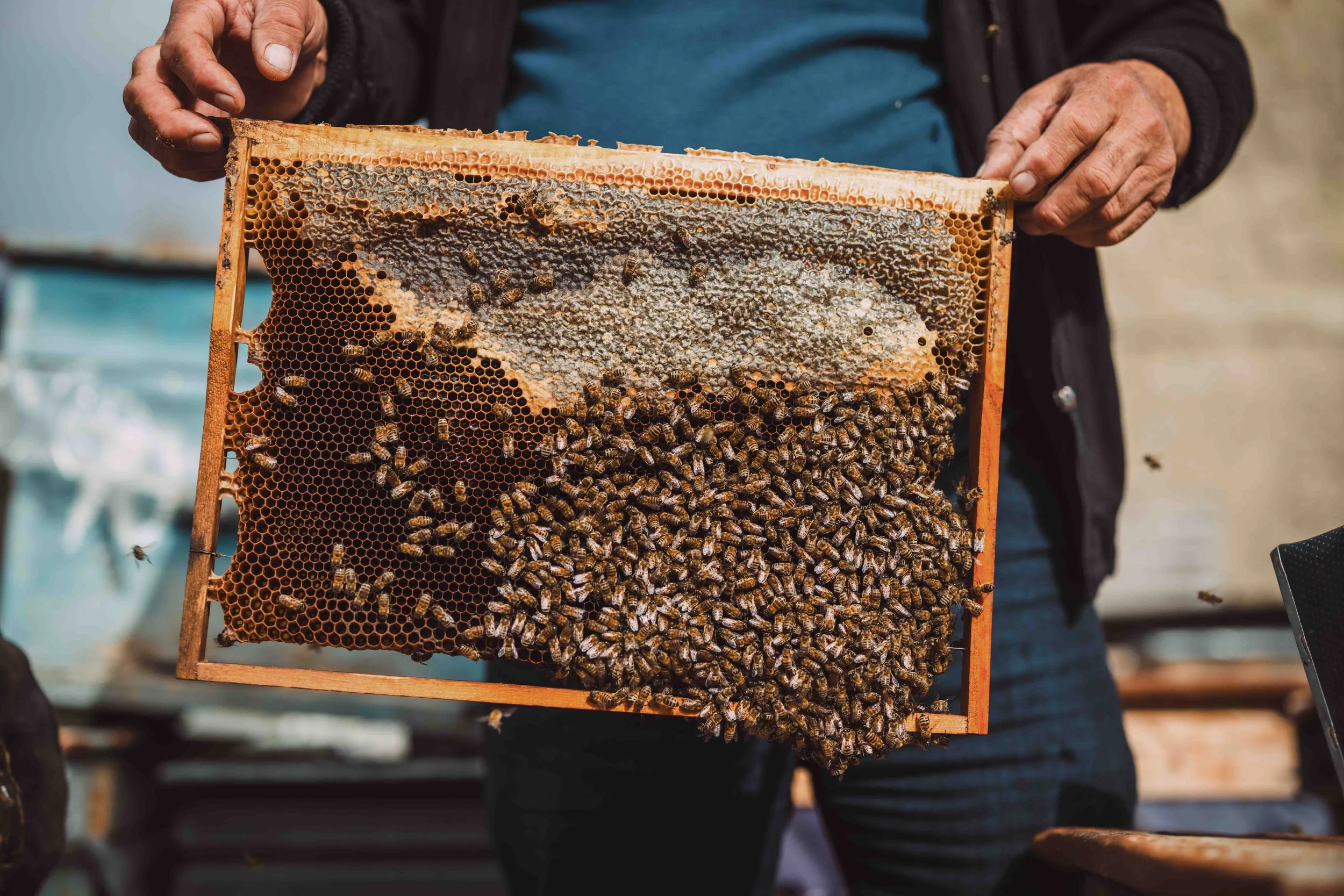
As Ehtiram lifts the frame from the hive, natural honey drips gently between the layers of wax. The work here is calm and focused — part of a yearly routine that keeps the honey cycle going from season to season.
“Pure honey crystallizes in the cold. That’s how you know it’s natural.”
Inside the house, Ehtiram’s wife prepares the glass jars to fill them with the honey collected during the summer. The family keeps part of the honey for their own use and shares the rest with relatives and neighbors in the village.
“We don’t sell honey. We give it to our brothers and sisters — the family is big, and it’s enough for all of us.”
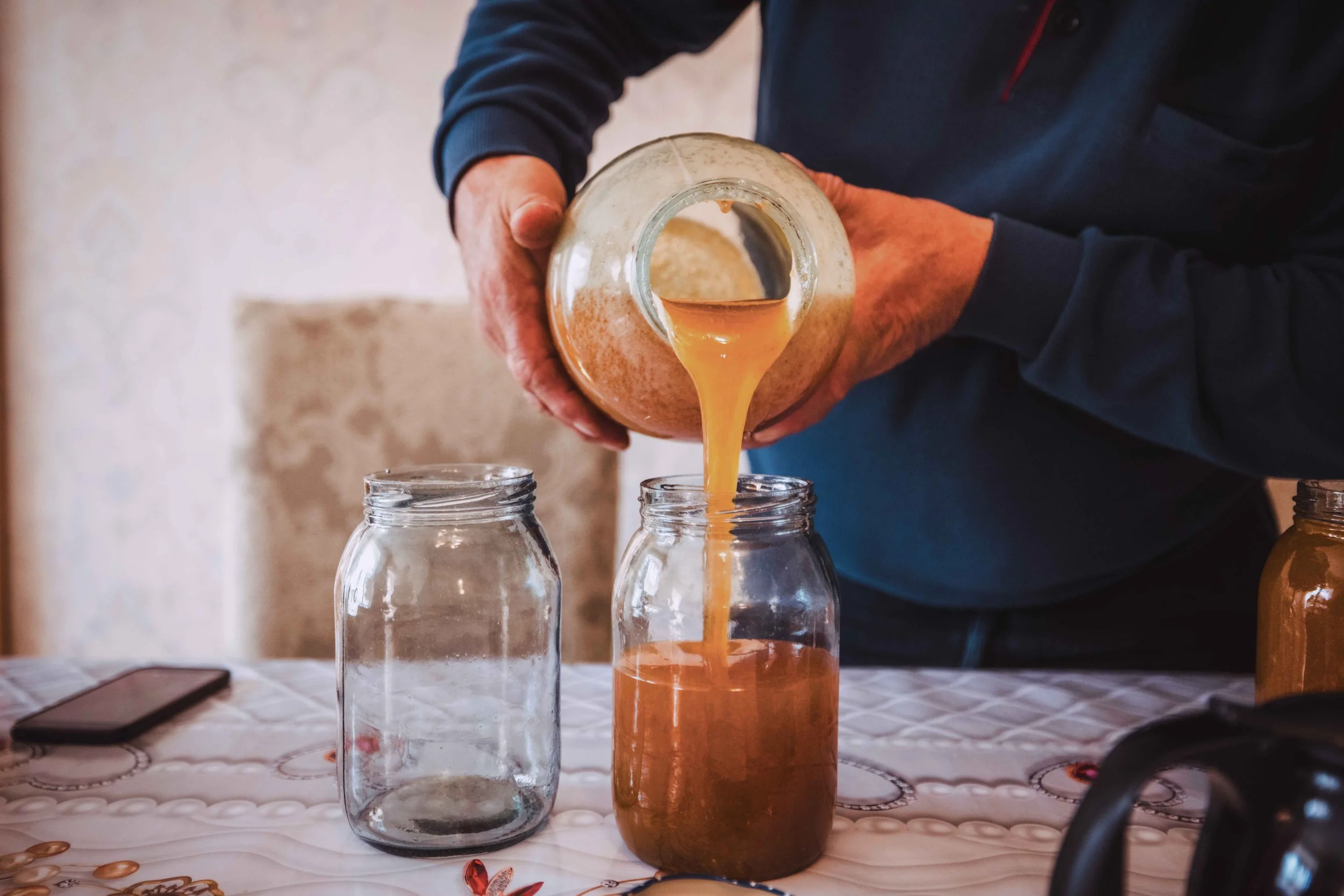
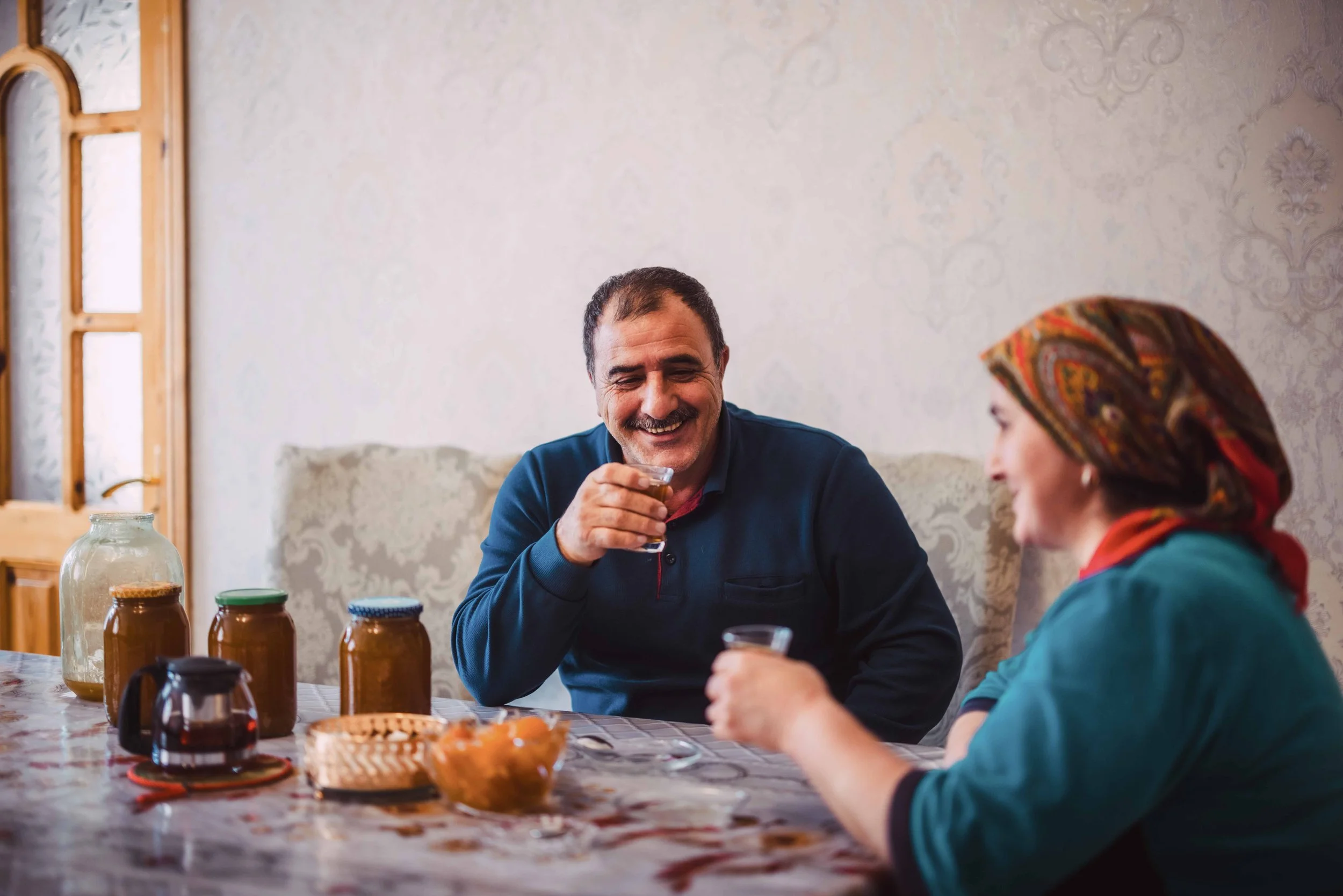
At the end of the day, Ehtiram and his wife sit at a simple table, drinking tea mixed with the honey they harvested from their own yard. They talk about the coming season, following the steady rhythm that shapes life in their village — the bees in their boxes, the light smoke in the air, and the evening tea that ends each day.
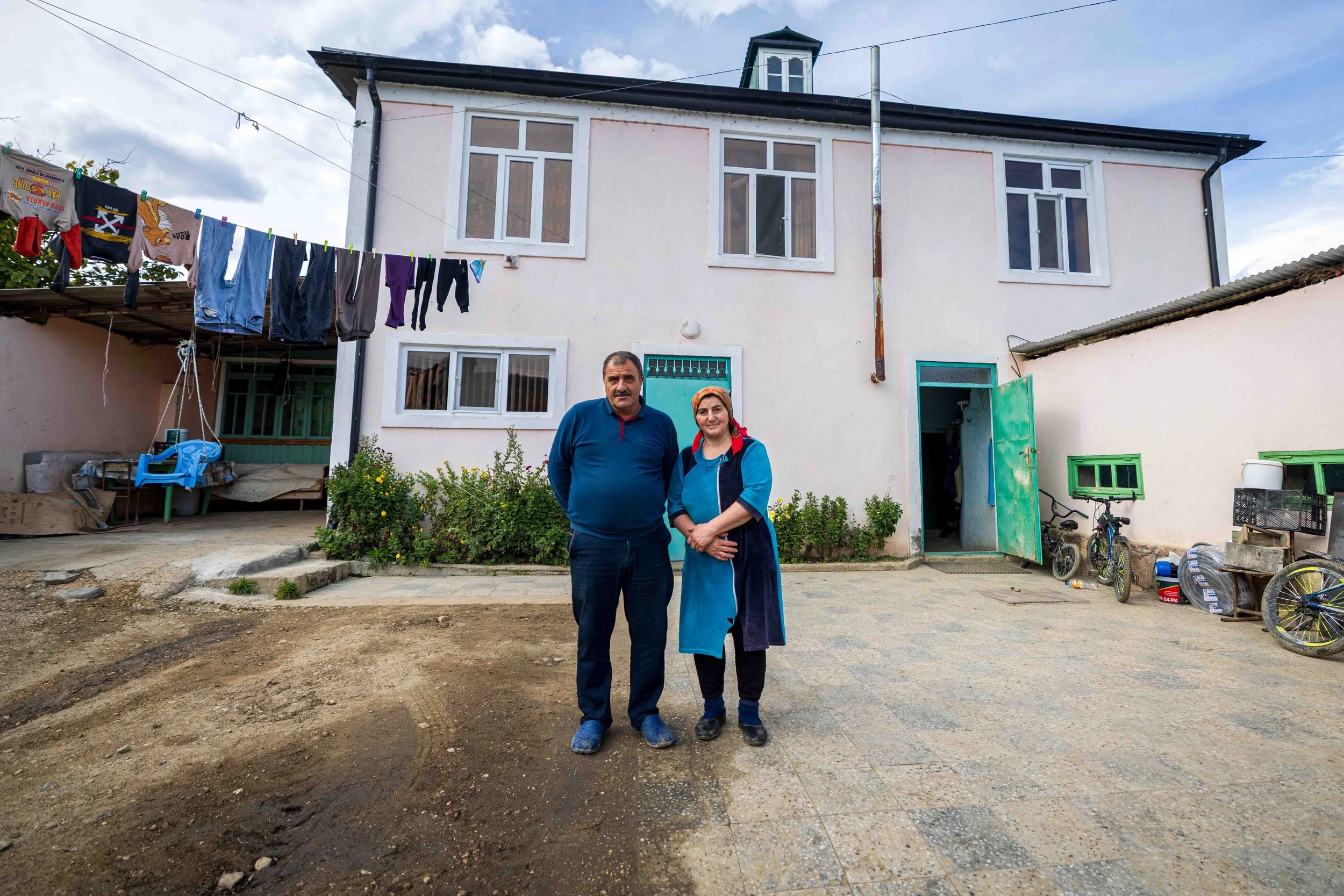
Before leaving, I asked Ehtiram and his wife to stand together in front of their home — the place where this story begins and ends. During my visit, they welcomed me warmly, shared their time, and allowed me to document their work with the bees. Ehtiram also offered me a jar of honey as a gift to take back home to my family — a simple gesture that reflects the warmth of this household.
My visit took place in October 2025.